

Its TWOSDAY - $2 Banknote Specials - September 8th
Here is the latest edition of a weekly One day Special
The two banknotes offered this week for the special are: A Uzbekistan 500 Som banknote from 1999, featuring the equestrian statue of Amir Temur (Tamerlane), and from a very colorful series of banknotes, the Venezuela 2 Bolivares banknote from 2013, featuring playful Amazon River Dolphins.
Twosday Banknote # 1:
UZBEKISTAN 500 Som (P81) 1999
The Uzbekistan 500 Som is an example of a banknote that carries the artistic traditions of Central Asia alongside the symbols of a newly independent republic finding its footing after the fall of the Soviet Union.
Let’s break down the technical specifications, artistic design elements, and the deep cultural stories woven into this banknote.
Technical Specifications & Fine Details
This 500 Som note was produced as part of Uzbekistan’s post-independence currency series.
|
|


Anatomy of the Note: Front (Obverse)
The obverse features the Coat of Arms of Uzbekistan prominently displayed in the center, surrounded by intricate geometric and floral guilloche patterns in the Islamic artistic tradition. The text is written in the Uzbek language using Cyrillic script, a legacy of the Soviet era — while the serial number prefix uses Latin characters, a reflection of Uzbekistan's post-independence transition toward the Latin alphabet. Serial number prefix LG.
The Main Vignette: Coat of Arms & The Humo Bird
|
The dominant artwork on the obverse is the Coat of Arms of Uzbekistan, featuring the mythical Humo bird at its centre — a phoenix-like creature from Central Asian folklore. The Coat of Arms is surrounded by intricate geometric and floral guilloche patterns in the Islamic artistic tradition that has defined this region of the Silk Road for over a thousand years. |
 |
The Legend of the Humo Bird
- Mythical Origins: The Humo is a mythical bird from ancient Central Asian and Persian folklore — a phoenix-like creature said to never land on the ground. According to Uzbek legend, whoever the shadow of the Humo bird falls upon shall become a king.
- Symbol of Freedom: The Humo represents happiness, freedom, and good fortune — chosen deliberately by Uzbekistan upon independence in 1991 as a uniquely Central Asian symbol, distinct from the Soviet eagle that preceded it.
- Silk Road Heritage: Uzbekistan sits at the heart of the ancient Silk Road — the trade route connecting China to Europe. Cities like Samarkand, Bukhara, and Tashkent were among the most important cultural and commercial centres of the medieval world. The Humo bird on this note connects every holder to that extraordinary history.

Anatomy of the Note: Back (Reverse)
The reverse shifts to one of Central Asia’s most iconic monuments — a symbol of national pride and historical greatness.
Historical Context
On 1 July 1994, Uzbekistan introduced the second som at a rate of 1 new som = 1,000 old som. These notes were produced locally at a government printing plant in Tashkent using equipment supplied by Harrison & Sons — which explains the fascinating contradiction between the Cyrillic text on the notes and the Latin text used for the serial number prefixes. Uzbekistan had declared independence after the fall of the Soviet Union in 1991 and now were producing their own banknotes after 70 years of Soviet rule.
The Main Vignette: Equestrian Statue of Tamerlane
|
The reverse features the iconic equestrian statue of Amir Temur (Tamerlane) in Tashkent — one of the most recognizable monuments in Central Asia. Amir Temur (1336–1405) was the founder of the Timurid Empire and remains the national hero of Uzbekistan. His statue, arm raised in a commanding gesture, stands in the heart of Tashkent's central square. The surrounding border features elaborate Islamic geometric patterns, and tilework designs reminiscent of Samarkand's famous architecture. |
 |
Geographic and National Identity
The National Flag
The flag of Uzbekistan features three horizontal bands of blue, white, and green separated by thin red stripes, with a white crescent moon and twelve stars on the blue band:
Blue represents the sky and water — historically associated with the Timurid dynasty of Tamerlane.
White represents peace and purity.
Green represents nature and fertility — Uzbekistan’s fertile valleys fed the Silk Road for centuries.

Geographic Location Map
Uzbekistan is a doubly landlocked country in Central Asia — one of only two countries in the world completely surrounded by other landlocked nations. It sits at the historic heart of the Silk Road, bordered by Kazakhstan, Kyrgyzstan, Tajikistan, Afghanistan, and Turkmenistan.

This 1999 Uzbekistan 500 Som (P81) was withdrawn from circulation in 2019, it is a genuine collectible piece of post-Soviet monetary history.
Add this banknote to your collection today at the special Twosday price.
🛒 Uzbekistan 500 Som — $2.00 Today Only
Twosday Banknote # 2:
VENEZUELA 2 Bolívares (P88f) 2013
The second note featured is the 2013 Venezuela 2 Bolívares banknote. Part of the Bolívares Fuertes family introduced on January 1, 2008, at a dramatic 1,000:1 revaluation, due to hyperinflation experienced by the country. This banknote features one of the Amazon’s most extraordinary and beloved creatures alongside one of South America’s greatest independence heroes.
Here we look closer at the technical specifications, artistic design elements, and the cultural significance of this beautiful South American banknote.
Technical Specifications & Fine Details
On 1 January 2008, the Banco Central de Venezuela introduced the Bolívares Fuertes (strong bolívar) family, revaluing the old currency at 1,000:1. The series initially came in six denominations from 2 to 100 bolivares. This Fuertes series celebrates its national heroes and extraordinary natural biodiversity.
- Catalog Number: Pick #88f
- Year of Issue: October 29, 2013
- Dimensions: 156 x 69 mm
- Material: High-quality security paper
- Watermark: Francisco de Miranda and electrotype 2
- Security Features: Solid security thread with demetallized BCV 2
- Printer: Casa de la Moneda — Venezuela
- Color Palette: Blue and orange
- Signatures: Sig. 31 — Merentes/Tovar, Prefix H-L
 Anatomy of the Note: Front (Obverse)
The front of the Venezuela 2 Bolívares immediately stands out — it is printed in vertical (portrait) orientation, an unusual design choice that sets it apart from most world banknotes.
Text and Languages
The text is rendered in Spanish, identifying the issuing authority — Banco Central de Venezuela — and the denomination of Dos Bolívares.
The Main Vignette: Francisco de Miranda
 |
The obverse features a dignified portrait of Francisco de Miranda (1750–1816) in full military uniform — Venezuelan revolutionary leader, general, and one of the foremost figures of the Spanish American independence movement. Miranda is unique in history for having fought in three major revolutions: the American Revolutionary War, the French Revolutionary Wars, and the Venezuelan War of Independence, earning him the title of El Precursor — The Forerunner. |

Anatomy of the Note: Back (Reverse)
The reverse showcases one of the Amazon’s most remarkable and beloved creatures against the backdrop of a Venezuelan national park.
The Main Vignette: Amazon River Dolphins
|
The reverse features two Amazon River Dolphins (Inia geoffrensis) — also known as the pink river dolphin or boto. These remarkable creatures are the largest river dolphin species in the world, found throughout the Amazon and Orinoco river basins. The background features Parque Nacional Médanos de Coro — Venezuela’s striking coastal sand dunes national park. |
 |
- Extraordinary Appearance: The boto is famous for its distinctive pink skin — the result of blood vessels close to the surface. Young dolphins are grey and gradually turn pink as they age.
- Amazon Folklore: In South American legend, the boto is a shapeshifter — said to emerge from the river at night in human form to attend village parties and seduce locals before returning to the water at dawn.
- Conservation Status: Listed as endangered, the Amazon River Dolphin faces threats from habitat loss, pollution, and fishing bycatch. Their appearance on Venezuelan currency reflects both national pride in biodiversity and a conservation statement.
Geographic and National Identity
The National Flag
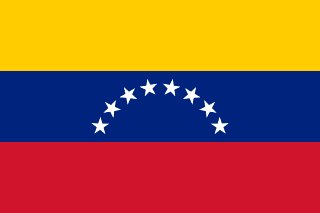
The Venezuelan flag features three horizontal bands of yellow, blue, and red with eight white stars in an arc and the national coat of arms:
Yellow represents the wealth of Venezuelan land and its golden resources.
Blue represents the sea that separates Venezuela from Spain — the ocean crossed in the fight for independence.
Red represents the blood of the heroes who gave their lives for independence.
Geographic Location Map
Venezuela is located on the northern coast of South America, bordered by Colombia, Brazil, and Guyana, with a long Caribbean coastline. It is home to part of the Amazon rainforest, the Orinoco River basin, and the spectacular Angel Falls — the world’s highest uninterrupted waterfall.

This 2013 Venezuela 2 Bolívares (P88f) appeals to collectors of South American banknotes, wildlife topicals especially dolphins and ocean creatures. The vertical format notes — a distinctive format of recent times, low price and colorful design immediately draws attention to general banknote collectors.
Add this piece of South American natural and revolutionary history to your collection today at the special Twosday price.
🛒 Venezuela 2 Bolívares — $2.00 Today Only
Enjoyed Reading About These Notes?
We’d love to hear from you! Which of these two notes caught your eye — the mythical Humo bird and Silk Road heritage of Uzbekistan, or the pink Amazon River Dolphin of Venezuela? Is there a specific banknote or country you would like to know more details about? Leave a comment below and let us know 👇
2 comments
Amy Lavigne
I bought these right away. Not only was the price too good to pass up but they were both beautiful additions. I also bought more Venezuelan notes at the same time.
CTina
Interesting background on the bank notes.
Looking forward to adding these to my collection.